
• Khả năng chống ăn mòn khi ẩm ướt
Vì thế,
con lăn phủ cacbuaChúng thích hợp cho quá trình phủ, xử lý ướt và môi trường hóa chất.Tại sao độ cứng của các con lăn phủ cacbua lại có thể khác nhau ngay cả khi chúng cùng loại?
Các yếu tố sau đây ảnh hưởng đến độ cứng cuối cùng của con lăn phủ cacbua:
1. Các công thức vật liệu khác nhau
Ví dụ:
• Lớp phủ WC–Co có độ cứng cao hơn lớp phủ Cr₃C₂–NiCr
• WC–CoCr có khả năng chống ăn mòn tốt hơn WC nguyên chất.
Do đó, việc lựa chọn lớp phủ phải phù hợp với điều kiện hoạt động.
2. Các quy trình khác nhau
Ví dụ:
• Công nghệ HVOF đạt được độ cứng cao nhất
• Phun plasma là lựa chọn tốt thứ hai.
• Phương pháp phủ laser có độ cứng ổn định nhưng thấp hơn một chút.
Công nghệ xử lý quyết định chất lượng lớp phủ.
3. Độ dày lớp phủ khác nhau
Lớp phủ quá dày dễ bị nứt; lớp phủ quá mỏng lại không có khả năng chống mài mòn.
4. Độ bền vật liệu nền khác nhau
Chất nền quá mềm có thể ảnh hưởng đến hiệu quả nâng đỡ bề mặt tổng thể.
Liệu độ cứng cao có nghĩa là con lăn phủ cacbua phù hợp hơn với mọi điều kiện hoạt động?
Độ cứng cao không có nghĩa là có lợi thế toàn diện.
Mặc dù độ cứng của con lăn phủ cacbua cao hơn nhiều so với thép, điều này không có nghĩa là nó nhất thiết phù hợp cho mọi ứng dụng.
Liệu độ cứng cao của con lăn phủ cacbua có gây ra bất kỳ nhược điểm tiềm tàng nào không?
Người dùng cần lưu ý những điểm sau:
1. Lớp phủ có thể trở nên giòn
Độ cứng càng cao thường đồng nghĩa với vật liệu càng dễ vỡ.
Do đó, con lăn phủ cacbua có thể không phù hợp với:
• Tác động mạnh mẽ
• Tác động gián đoạn
• Tải trọng điểm quá cao
Trong những trường hợp này, con lăn bằng thép đặc sẽ ổn định hơn.
2. Lớp phủ có thể bị bong tróc (nếu quy trình kém chất lượng)
Nguy cơ lớp phủ bị bong tróc thường bắt nguồn từ:
• Độ bám dính thấp
• Lớp phủ quá dày
• Sự không phù hợp về giãn nở nhiệt
• Xử lý sơ bộ con lăn không đầy đủ
Độ cứng cao không nhất thiết đồng nghĩa với độ tin cậy cao.
3. Việc sửa chữa bề mặt trục lăn rất khó khăn.
Độ cứng cao hơn khiến việc đánh bóng và sửa chữa trở nên khó khăn hơn.
Khi nào thì con lăn thép phù hợp hơn con lăn phủ cacbua?
Mặc dù thép có độ cứng thấp hơn so với lớp phủ cacbua xi măng, nhưng nó vẫn là lựa chọn tốt hơn trong một số trường hợp nhất định:
• Môi trường có tác động mạnh
• Yêu cầu về độ bền cao
• Tiếp xúc với vật liệu mềm
• Hạn chế về chi phí
• Khi yêu cầu khả năng chịu biến dạng cực cao
Do đó, chìa khóa để chọn con lăn không phải là "càng cứng càng tốt", mà là "độ cứng phù hợp nhất".
Các con lăn được phủ hợp kim cacbua xi măng cứng hơn thép đáng kể, thường cứng hơn gấp vài đến mười lần.
Điều này khiến chúng vượt trội hơn hẳn về khả năng chống mài mòn, độ ổn định bề mặt và khả năng chống ăn mòn.
Ưu điểm của con lăn phủ cacbua:
• Điện áp cao có thể đạt 900–1500, cao hơn nhiều lần so với thép.
• Khả năng chống mài mòn tuyệt vời
• Khả năng chống ăn mòn tốt
• Độ ổn định bề mặt cao
• Tuổi thọ sử dụng lâu dài
Nhược điểm của con lăn phủ cacbua:
• Lớp phủ có thể dễ vỡ, cần tránh va đập.
• Khó sửa chữa
• Chi phí cao hơn so với con lăn mạ crom hoặc thép thông thường
• Phụ thuộc vào các quy trình phun chất lượng cao
Mặc dù các con lăn phủ cacbua cứng hơn thép, nhưng tính phù hợp của chúng phụ thuộc vào điều kiện hoạt động cụ thể, chứ không chỉ phụ thuộc vào giá trị độ cứng.
2. Spraying or cladding processes make the coating dense and uniform
For example, the HVOF process allows powder to impact the roller surface at supersonic speeds, forming:
• High density
• High bonding strength
• Extremely low porosity
This further enhances the coating hardness.
3. Controllable coating thickness allows hardness to be more concentrated on the surface
Hardness does not need to penetrate the entire roller body; it only needs to be concentrated on the roller surface.
This leads to:
• Reduced costs
• Improved performance
• Unaffected roller body strength
The coating effectively "amplifies" the hardness, making it the most wear-resistant part of the roller body.
In what specific ways does the high hardness performance of hard alloy coated rollers manifest itself?
Many users do not know the true meaning of high hardness.
Hardness is not just a number; it reflects the overall performance of the roller.
Are hard alloy coated rollers more wear-resistant?
Yes.
High hardness means the roll surface is less prone to:
• Scratches
• Dents
• Wear bands
• Deterioration of surface roughness
Suitable for long-term high-speed operation.
Can carbide-coated rolls withstand higher pressure?
Compared to steel rolls:
• Coated rolls are more resistant to pitting
• Less prone to surface indentations
• Withstand higher friction
Therefore, they are ideal for high-stress conditions such as calendering, rolling, and stretching.
Are carbide-coated rolls more corrosion-resistant?
Some carbides (such as Cr₃C₂) are more corrosion-resistant than steel.
For example:
• Acid resistance
• Alkali resistance
• Salt spray resistance
• Wet corrosion resistance
Therefore, carbide-coated rolls are suitable for coating, wet processes, and chemical environments.
Why can the hardness of carbide-coated rolls vary even when they are the same type?
The following factors affect the final hardness of carbide-coated rollers:
1. Different material formulations
For example:
• WC–Co coatings have higher hardness than Cr₃C₂–NiCr
• WC–CoCr has stronger corrosion resistance than pure WC
Therefore, the coating selection must match the operating conditions.
2. Different processes
For example:
• HVOF achieves the highest hardness
• Plasma spraying is the next best
• Laser cladding has stable but slightly lower hardness
The processing technology determines the coating quality.
3. Different coating thicknesses
Too thick a coating is prone to cracking; too thin a coating is not wear-resistant.
4. Different substrate material strengths
A substrate that is too soft may affect the overall surface support effect.
Does high hardness mean that carbide-coated rollers are more suitable for all operating conditions?
High hardness does not mean "all-around advantage."
Although the hardness of carbide-coated rollers is much higher than that of steel, this does not mean that it is necessarily suitable for all applications.
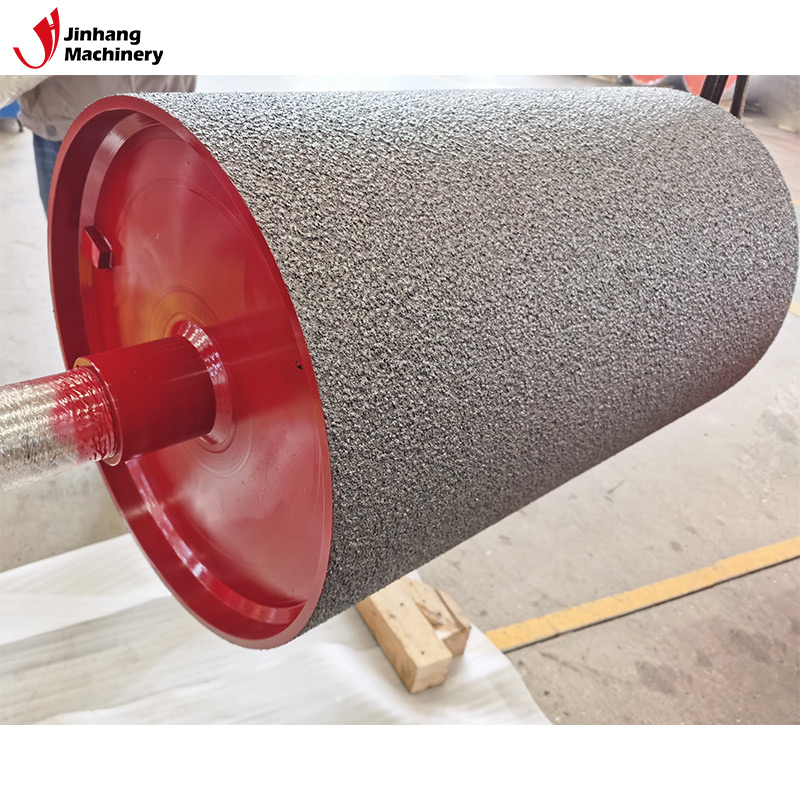
Are there any potential disadvantages to the high hardness of carbide-coated rollers?
The following points should be noted by users:
1. Coating may become brittle
Higher hardness generally means a more brittle material.
Therefore, carbide-coated rollers may not be suitable for:
• High impact
• Intermittent impacts
• Excessively high point loads
In these situations, a solid steel roller is more stable.
2. Coating may peel off (if the process is poor)
The risk of coating peeling usually stems from:
• Low bond strength
• Coating too thick
• Thermal expansion mismatch
• Inadequate roller pretreatment
High hardness itself does not necessarily mean high reliability.
3. Roll surface repair is difficult
Higher hardness makes polishing and repair more difficult.
When is a steel roller more suitable than a carbide-coated roller?
Although steel is less hard than cemented carbide coatings, it remains a better choice in certain scenarios:
• High-impact environments
• High toughness requirements
• Contact with flexible materials
• Cost constraints
• When extremely high deformation tolerance is required
Therefore, the key to selecting a roller is not "the harder the better," but rather "the most suitable hardness."
Cemented carbide coated rollers are significantly harder than steel, typically several to ten times harder.
This makes them exceptionally superior in terms of wear resistance, surface stability, and corrosion resistance.
Advantages of carbide-coated rollers:
• HV can reach 900–1500, several times higher than steel
• Excellent wear resistance
• Good corrosion resistance
• High surface stability
• Long service life
Disadvantages of carbide-coated rollers:
• The coating may be brittle, requiring avoidance of impacts
• Difficult to repair
• Higher cost than ordinary chrome-plated or steel rollers
• Reliance on high-quality spraying processes
While carbide-coated rollers are indeed harder than steel, their suitability depends on the specific operating conditions, not just the "hardness value" itself.